Free Range, Grass Fed, and Local
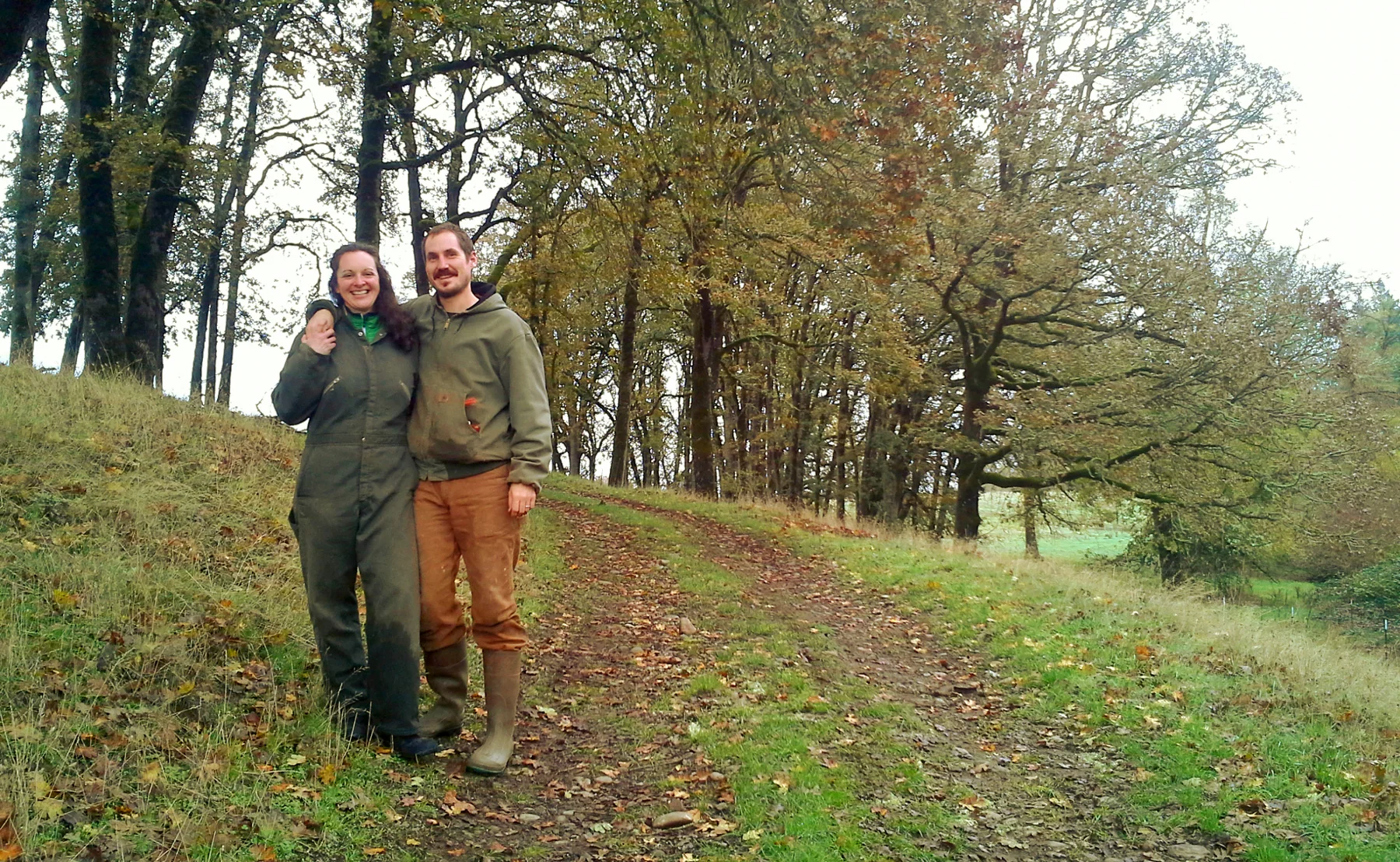
We’re Nathan and Amanda Moomaw and we started our farm in 2013 to provide humane, pastured meat to folks around Portland, Oregon. We got going with the support of our initial 60 members who paid up front to get meat from us delivered to their homes. In the early years we raised all the animals ourselves, but since we’ve always had more demand than we could handle, we started collaborating with other small-scale family farmers who are equally committed to raising animals the right way.
Amanda grew up in rural Vermont with dairy farming and family all just a walk down the road or a snowmobile ride over the hill. Her education and professional roles have combined both nutrition and culinary fields, which aligns with her “food as medicine” ethos. She brings a love of healthy eating and a dedication to small-scale agriculture in her current full-time role as co-owner of Moomaw Family Farm. When she’s not on the job, you can usually find her in the kitchen making sourdough bread, bone broth, fruit preserves, and dinner, often at the same time.
Nathan did not have a rural upbringing, but found his way there after a brief career recording classical and jazz music in Chicago. Seeking a more grounded and impactful line of work, he apprenticed on multiple veggie and livestock farms, managed a farmers market, and also worked at grocery stores for several years until he felt ready to launch his own farm. In 2012 he moved back home to Oregon and started Moomaw Family Farm on leased land, raising chickens, pigs, lambs, and rabbits. He and Amanda got married during this time and they’ve been running the operation together ever since.
Humane treatment is our number one priority.
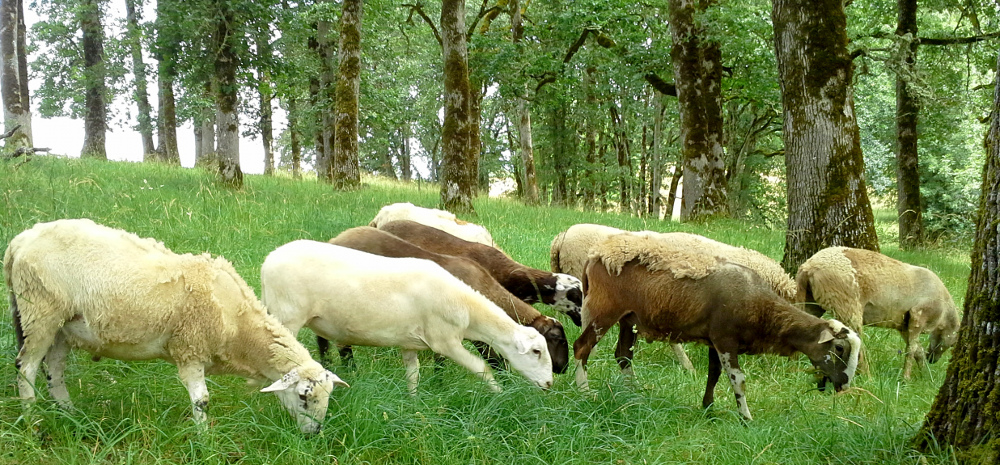
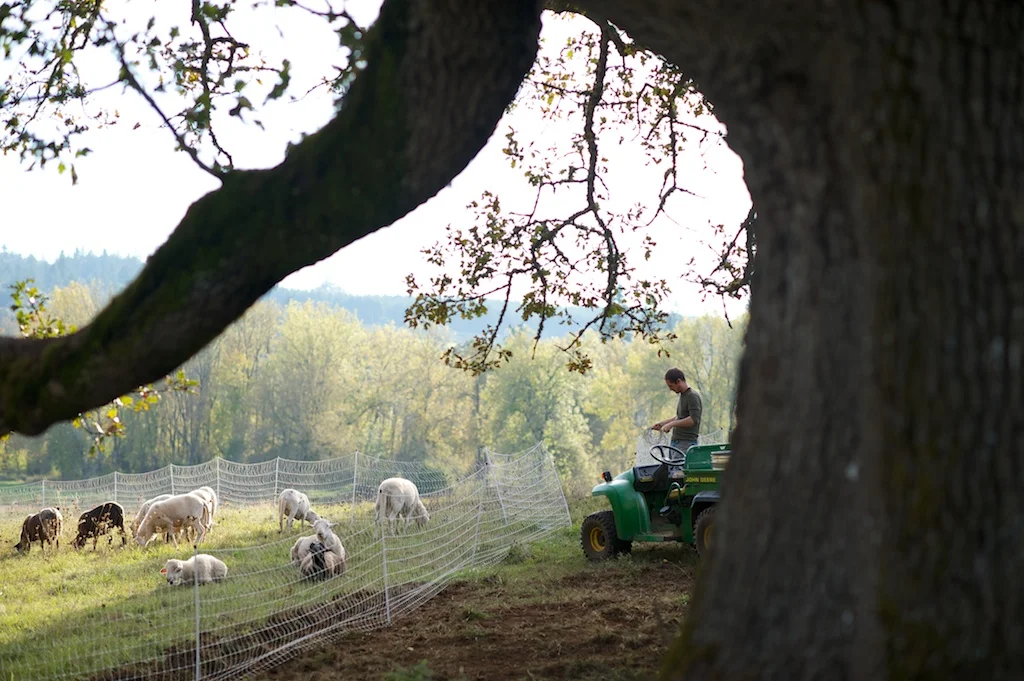
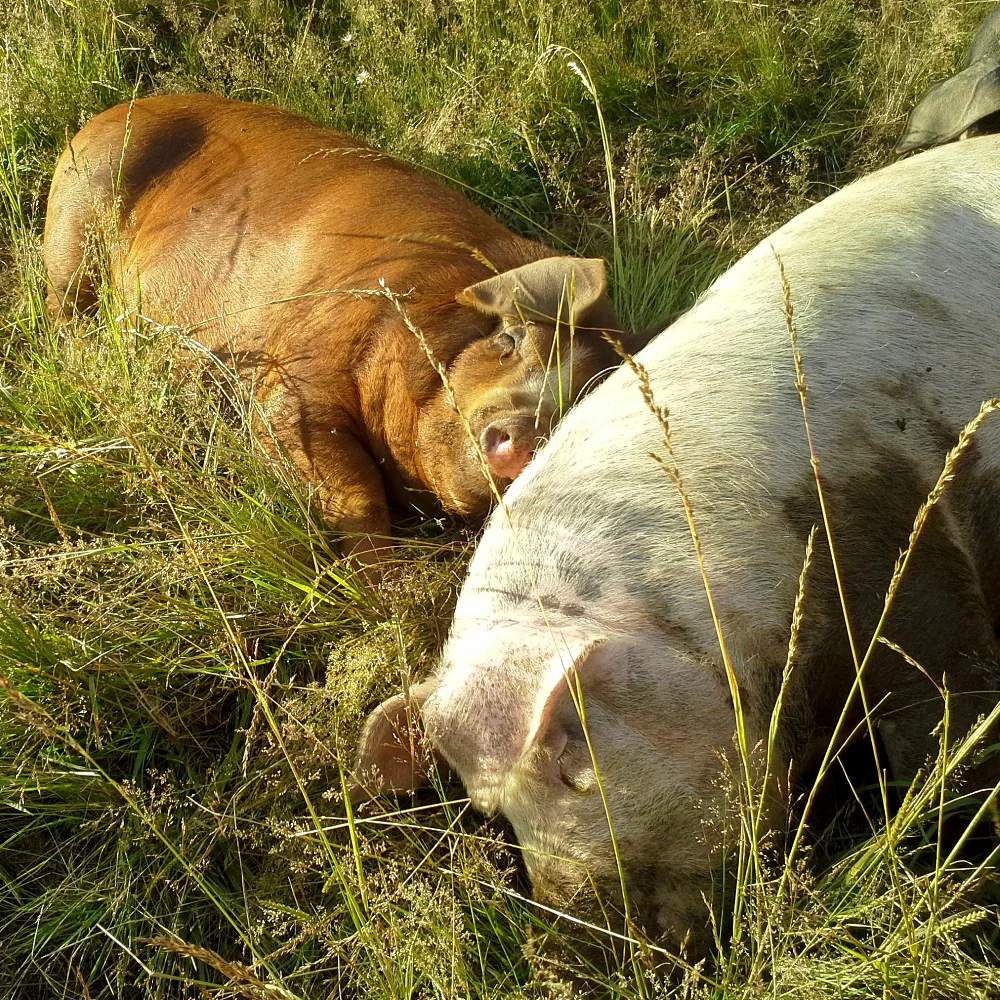
The welfare of our animals always comes first. They are moved regularly in small batches through pastures and woodlands using rotational grazing. When raised this way, they are naturally happy, healthy, and a joy to work with. The cows and sheep are entirely grass-fed and grass-finished, while the pigs and chickens receive locally-milled grains, primarily barley, wheat, oats, and peas, while avoiding corn and soy.
No antibiotics, hormones, or mRNA vaccines
We closely manage our animals and land in a naturally sustainable way, so that we are not dependent on medications to keep them healthy. We don’t use antibiotics, hormones, or mRNA vaccines.
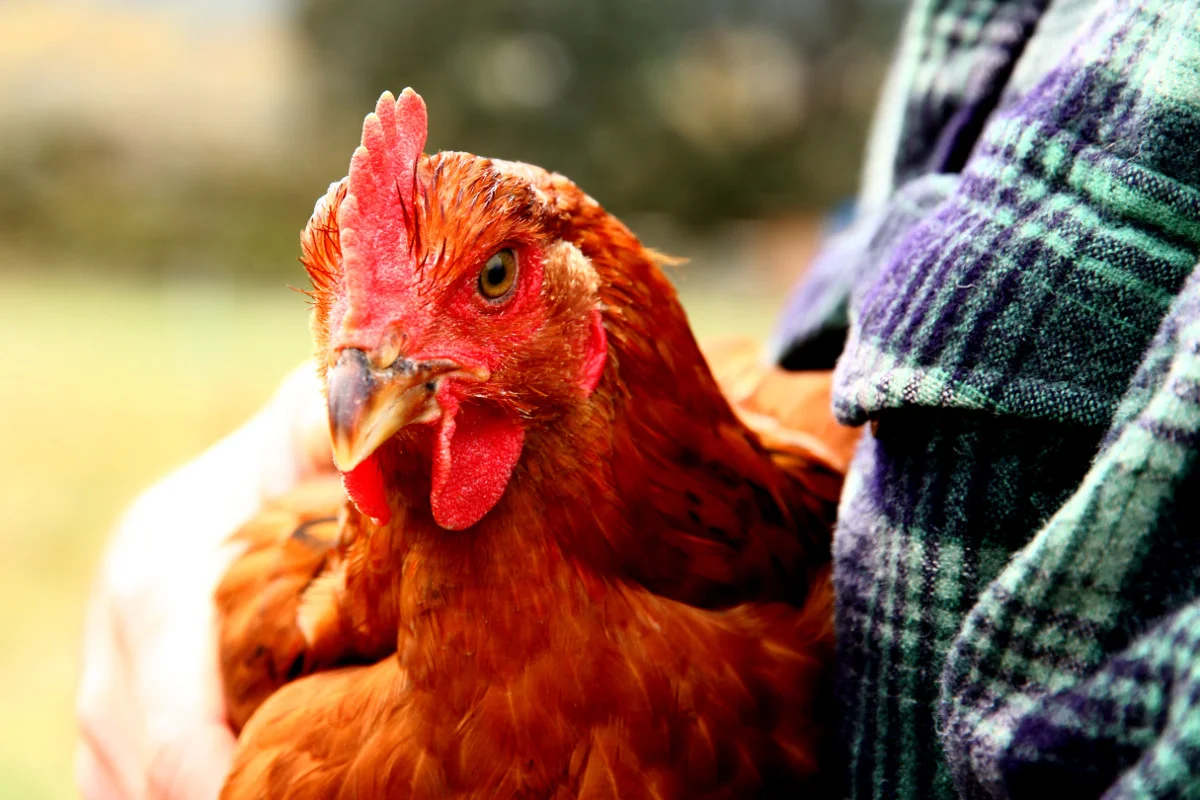
Healthy land, healthy animals
We support diverse and healthy pastures through the rotational grazing of our animals; and in turn the health of the animals is supported by being moved regularly.
Wildlife habitat combined with agriculture
By cultivating lush and diverse habitats on our farms, we can both produce food for people and simultaneously support wildlife on the same piece of land. We've planted hundreds of trees into our pastures, such as oak, ponderosa pine, elderberry, hazelnut, apple, and service-berry. These trees provide food and shade for the animals, as well as diverse habitat for wildlife and native pollinators. We believe the marriage of regenerative farming and nature conservation is one of the best ways to achieve a truly sustainable future.
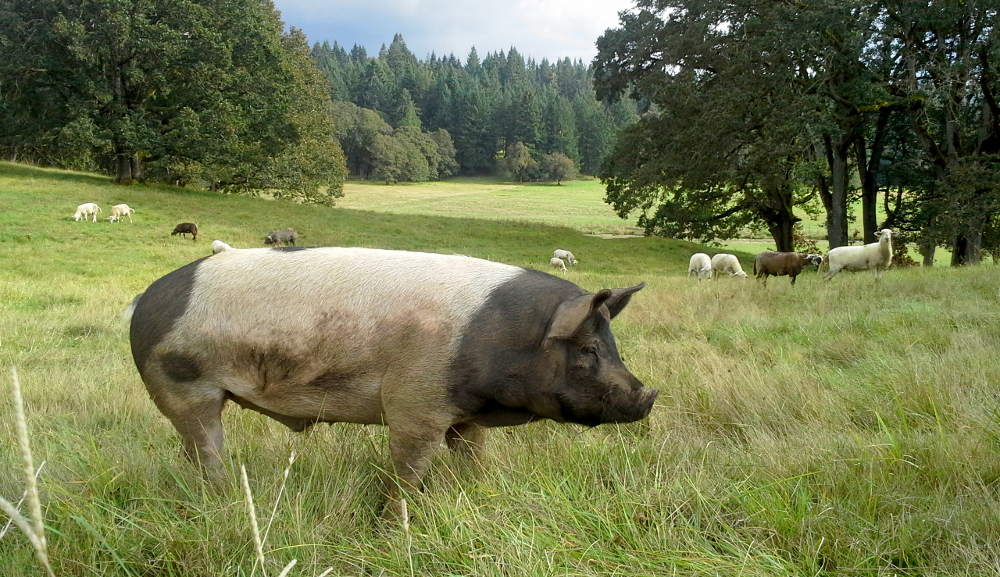
Soil is improved each year
Good soil is the foundation of a productive farm, a diverse ecosystem, and a stable climate. On our farms, biologically active soil is generated and held in place by grasses, plants, and trees. Animals grazing those plants return nutrients to the land, which furthers the health of the soil and the plants in the pastures.
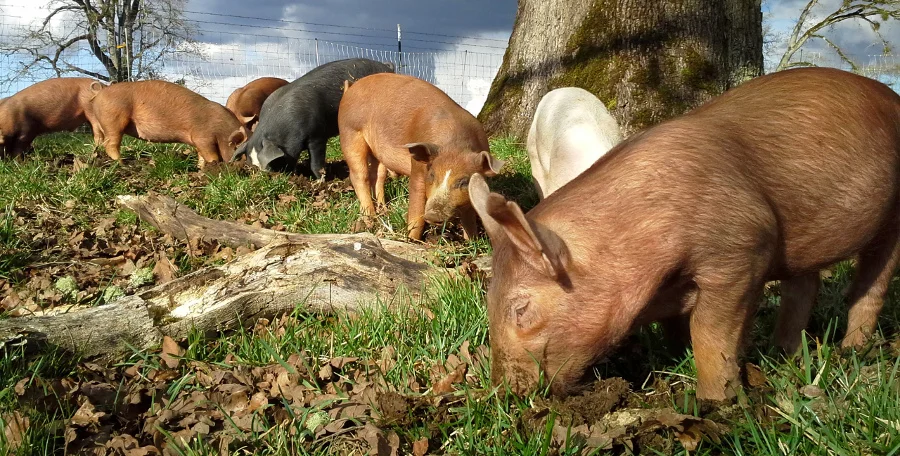
Minimal use of fossil fuels
Having animals outside on pasture year-round means we don't have to construct or power large buildings in which to house the animals, which means our energy and materials use is minuscule compared to industrial livestock operations. Our farm is also only 10 miles from Portland, which means our entire distribution chain from farm to plate uses a tiny fraction of gas compared to most meats.
Significant carbon and nitrogen sequestration
Grazing animals on land with perennial grasses and trees is a remarkably effective way of pulling carbon out of the air. The fact that we raise animals outside on diverse pasture combined with our minimal use of fossil fuels, means that the meat we produce is almost certainly carbon neutral.